
Few regions in France possess a culinary identity as distinctive as Alsace. Nestled between France and Germany, this historic region has developed a cuisine that beautifully blends French refinement with Germanic traditions, creating comforting dishes, exceptional wines, and recipes passed down through generations.
This Alsace’s Food Guide introduces the region’s most iconic specialties, from rustic family recipes to elegant wine pairings. Whether you’re exploring Strasbourg, wandering through picturesque wine villages, or following the Alsace Wine Route, discovering the local cuisine is an essential part of experiencing the region’s rich cultural heritage.
Table of Contents
- Why Is Alsace’s Cuisine So Unique?
- Flammekueche: Alsace’s Iconic Flatbread
- Choucroute Garnie: The Classic Alsatian Dish
- Traditional Dishes You Should Try
- Sweet Specialties of Alsace
- Alsace Wines and Food Pairings
- Where to Experience Authentic Alsatian Cuisine
- Discover Alsace Through Its Cuisine with France Intense
Why Is Alsace’s Cuisine So Unique?
Alsatian cuisine reflects centuries of cultural exchange between France and Germany. Throughout its history, the region changed political borders several times, creating a unique culinary tradition that combines hearty German influences with the elegance and craftsmanship of French gastronomy.
Seasonal ingredients, local wines, artisanal cheeses, and recipes rooted in family traditions remain central to everyday life. Rather than focusing on elaborate preparations, Alsace celebrates authenticity, generous flavors, and meals meant to be shared around the table.
This strong regional identity makes Alsace one of France’s most rewarding destinations for travelers seeking both cultural discovery and memorable food experiences.
Flammekueche: Alsace’s Iconic Flatbread
No introduction to Alsace food would be complete without Flammekueche, also known as Tarte Flambée. Originally created by local bakers to test the temperature of wood-fired ovens, it has become one of the region’s signature dishes.
Prepared with an ultra-thin crispy dough, Flammekueche is traditionally topped with fresh cream, onions, and smoked bacon before being baked at high temperature. Today, many variations include local cheeses, mushrooms, seasonal vegetables, or even sweet ingredients for dessert.
Simple yet full of character, it perfectly represents the convivial spirit of Alsatian cuisine.
Choucroute Garnie: The Classic Alsatian Dish
Perhaps the most famous specialty of the region, Choucroute Garnie showcases the historical influence of Central European cuisine.
The dish combines slowly fermented sauerkraut with an assortment of cured sausages, smoked pork, ham, and potatoes. Rich in flavor and deeply rooted in local traditions, it has become a symbol of Alsatian hospitality and is especially popular during the colder months.
When paired with a crisp local Riesling, Choucroute Garnie offers one of the most authentic gastronomic experiences in the region.
Traditional Dishes You Should Try
Beyond its two best-known specialties, Alsace offers a remarkable variety of traditional dishes that reflect the diversity of its culinary heritage.
Baeckeoffe is a slow-cooked casserole prepared with marinated meats, potatoes, onions, and white wine, traditionally baked for several hours until exceptionally tender.
Spaetzle, soft handmade egg noodles, often accompany meat dishes and rich sauces, while Munster cheese, produced in the Vosges Mountains, is famous for its distinctive aroma and creamy texture.
Fresh pretzels, artisanal charcuterie, and seasonal foie gras also appear frequently throughout the region, particularly in traditional family-run restaurants known as winstubs.
Sweet Specialties of Alsace
Desserts occupy a special place in Alsatian gastronomy.
The iconic Kougelhopf, recognizable by its distinctive ring-shaped mold, is a light brioche traditionally prepared with raisins and almonds. Served for breakfast, afternoon tea, or festive occasions, it remains one of the region’s most beloved pastries.
During the Christmas season, bakeries prepare Bredele, delicate butter biscuits flavored with cinnamon, vanilla, anise, or citrus. Another local favorite is Pain d’Épices, a fragrant spiced bread that reflects the long-standing culinary traditions of northeastern France.
Seasonal fruit tarts featuring apples, cherries, plums, or mirabelle are equally popular and highlight the region’s agricultural heritage.
Alsace Wines and Food Pairings
Wine plays an essential role in Alsatian cuisine. The region is internationally recognized for producing elegant white wines that pair naturally with its traditional dishes.
A mineral Riesling beautifully complements seafood, Flammekueche, and Choucroute Garnie, while the aromatic Gewürztraminer pairs wonderfully with Munster cheese, foie gras, and richer recipes. Pinot Gris offers excellent versatility for roasted meats and creamy dishes, whereas Crémant d’Alsace provides a refreshing accompaniment for aperitifs and celebrations.
Exploring these pairings allows visitors to better appreciate how food and wine have evolved together as part of Alsace’s cultural identity.
Where to Experience Authentic Alsatian Cuisine
Some of the finest culinary experiences are found in the region’s historic villages and traditional winstubs, where recipes have often remained unchanged for generations.
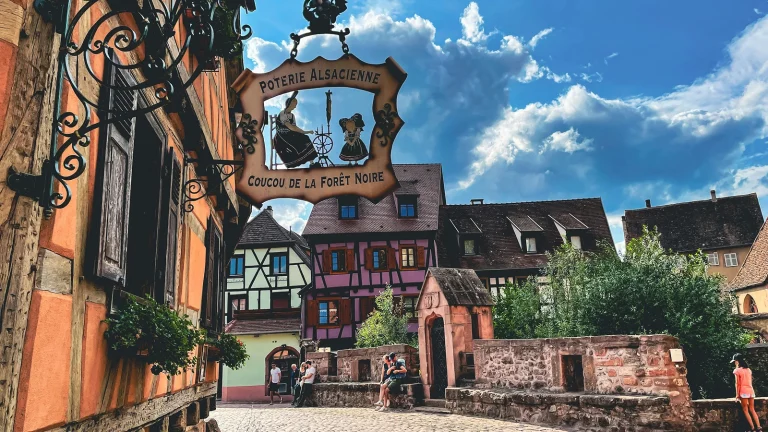
Strasbourg offers a vibrant mix of classic taverns and refined restaurants, while villages such as Colmar, Riquewihr, Eguisheim, and Kaysersberg invite visitors to discover local specialties in intimate settings surrounded by half-timbered houses and vineyards.
Local markets, seasonal festivals, and wine estates also provide opportunities to taste regional products directly from the artisans who continue to preserve Alsace’s gastronomic traditions.
Discover Alsace Through Its Cuisine with France Intense
Experiencing Alsace means discovering much more than its picturesque villages and vineyards—it means understanding a culture expressed through its cuisine, wines, and centuries-old traditions.
France Intense invites travelers to explore this remarkable region with knowledgeable French guides who share not only its history and landscapes but also the local flavors that define everyday life. Combined with charming wine villages, exceptional vineyards, and authentic cultural encounters, Alsatian gastronomy becomes an unforgettable part of every journey.
Key Takeaways
- Alsace food reflects a unique blend of French and German culinary traditions.
- Flammekueche and Choucroute Garnie are the region’s two most iconic dishes.
- Traditional specialties such as Baeckeoffe, Munster cheese, Spaetzle, and Kougelhopf reveal the richness of Alsatian cuisine.
- Alsace’s renowned white wines—including Riesling, Gewürztraminer, Pinot Gris, and Crémant d’Alsace—perfectly complement regional dishes.
- Exploring local villages, winstubs, markets, and vineyards offers one of the most authentic ways to experience the cultural heritage of Alsace.